Wandsworth Council permits for Earlsfield removal vans
Posted on 26/06/2026

Wandsworth Council permits for Earlsfield removal vans: what you need to know before moving day
If you're moving in or out of Earlsfield, the last thing you want is a removal van parked where it shouldn't be, a neighbour complaining, or a sudden penalty turning a busy day into a headache. That's why Wandsworth Council permits for Earlsfield removal vans matter. In plain English, they help you use the road space you need, legally and sensibly, without causing avoidable disruption. And let's be honest: moving day already brings enough noise, tape, and "where did we put the kettle?" moments without adding a parking problem on top.
This guide explains when a permit may be needed, how the process usually works, what to check before booking a van, and how to keep your move calm and compliant. You'll also find practical tips, a comparison table, a real-world example, and a checklist you can use the day before the move. If you're juggling stairs, narrow roads, and a timetable that's already too tight, this should make the whole thing feel a bit more manageable.
Why Wandsworth Council permits for Earlsfield removal vans Matters
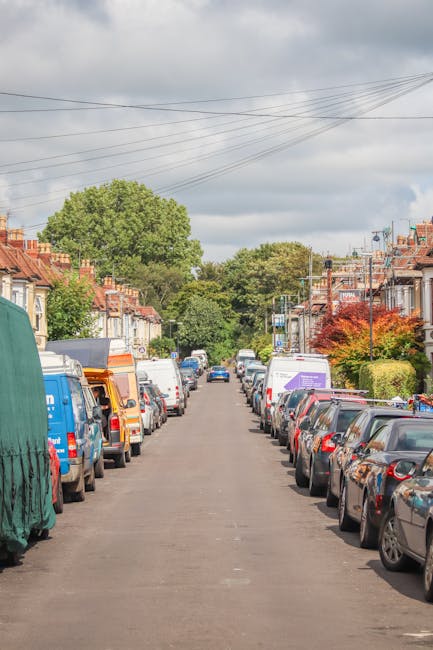
Earlsfield has plenty of homes where access is not exactly generous. You've got residential streets, controlled parking zones, terraced roads, flats with tight turns, and those moments where a van is technically "just for ten minutes" but somehow becomes everyone's problem. A permit is there to reduce that friction. It gives your removal vehicle a better chance of stopping where loading and unloading can happen safely, without relying on luck or a hurried guess about local restrictions.
For anyone moving house, the main issue is not only convenience. It's timing, safety, and avoiding a chain reaction of delays. A van parked awkwardly can slow down the crew, create a hazard for pedestrians, and make every box trip feel longer than it should. If you've already spent the morning wrapping mirrors and arguing with a mattress bag, you will notice the difference that proper parking makes.
There's also the trust side of it. When a move is planned properly, the day tends to feel less chaotic. That matters for families, students, landlords, and anyone coordinating keys, cleaners, and building access. If you want a smoother transition, it helps to think about the move as a small project rather than a single frantic event. Our guide to finding peace of mind while moving house covers that mindset well, and it pairs nicely with planning your van access early.
How Wandsworth Council permits for Earlsfield removal vans Works
In practice, the permit process is about requesting legal permission to use a road space or loading arrangement that would otherwise be restricted. The exact rules depend on the street, the time of day, the type of bay or restriction, and whether the vehicle is staying only to load or unload. Some streets allow quick loading without much drama; others are stricter, especially during busy hours. Truth be told, the details are where people usually get caught out.
For a removal van, the key is to match the vehicle's footprint and timing to the location. A short move from a flat on a side road may need a different approach from a full house move on a narrow street near busier traffic. If your property has awkward access, it is worth checking this before the boxes are stacked by the door. A van can look perfectly fine on paper and still be an awful fit for the street in real life. That part catches people more than you'd think.
In Earlsfield, where many moves involve flats, shared entrances, or quick stops rather than all-day loading, it can also help to think about route planning and building access together. For example, if you are dealing with tricky stairwells, this piece on tight staircases in Earlsfield flats explains why access planning matters just as much as the permit itself. A permit gets the van close; the rest is making that closeness count.
What usually affects the permit decision
- The street's parking restrictions and time limits
- Whether the van needs to stop in a bay, at the kerb, or near double yellow lines
- The length of time required for loading and unloading
- Whether the vehicle will block traffic, driveways, or emergency access
- Any local conditions attached to the road or bay
Put simply, the council is trying to balance your move with everyone else's day. Fair enough. That's why clear timing and the right vehicle size matter so much.
Key Benefits and Practical Advantages
The obvious benefit is avoiding parking trouble, but there's a bit more to it than that. A permit can reduce wasted time, protect your belongings from rushed carrying, and keep the move more orderly. That becomes especially valuable if you're moving large furniture, white goods, or awkward items that need the van to sit close by.
It can also reduce stress for the removal team. When access is planned, the team spends less time shuffling between the property and a distant parking spot. That helps with heavier items, too. If you're curious about the physical side of moving, our article on lifting heavy objects by yourself gives a realistic sense of why short distances and proper technique matter so much. No one needs heroics on moving day. They need smooth repetition and fewer surprises.
Another benefit is predictability. A move with a permit and a known loading point is easier to coordinate with cleaners, key handovers, and storage runs. If you are already thinking about decluttering before the move, this can be a huge help. Fewer items means less loading time, which may reduce the amount of access space you need. The article on what to keep and toss before moving is useful here, because honestly, half the battle is deciding what should even go in the van.
| Approach | Best for | Pros | Watch out for |
|---|---|---|---|
| Permit-backed loading bay use | Moves on restricted residential streets | More certainty, less parking stress | Needs planning and timing |
| Short curbside loading without permit | Very brief, low-disruption stops | Quick when allowed | Not suitable everywhere |
| Distant parking and carrying | Simple streets with limited restrictions | May avoid permit admin | Slower, harder, more physically demanding |
To be fair, there are moves where the permit is not the star of the show. But when parking is tight, it becomes one of those small decisions that has a surprisingly big effect.
Who This Is For and When It Makes Sense
If you are moving from a flat in Earlsfield, especially near busier roads or shared housing, you're a strong candidate for checking permit requirements early. The same applies if the building has no private driveway, the street is narrow, or you're arranging a same-day collection and delivery window. Those are the situations where parking can become the hidden pressure point.
Students moving into or out of smaller properties often think they can "just wing it" with a van and a friend. Sometimes that works. Sometimes it turns into three awkward parking circles and one irritated neighbour. If your move is light, a compact vehicle or a student removals service in Earlsfield can be a better fit than a larger vehicle. For more flexible jobs, man with a van in Earlsfield is often the practical middle ground.
This is also relevant if you have:
- bulky furniture that needs close access
- large appliances or fragile items
- a move outside standard working hours
- a shared entrance or limited lift access
- multiple drop-offs, storage runs, or staged moving plans
And if you've got a last-minute move on your hands, the permit question becomes even more important because there's less time to fix access problems. In that case, the advice in last-minute Earlsfield moving tips is worth a look. Same-day moves leave little room for parking guesswork, that's the blunt truth.
Step-by-Step Guidance
The safest way to handle Wandsworth Council permits for Earlsfield removal vans is to work backwards from moving day. Start with the property, then the street, then the vehicle, then the timing. That sequence sounds boring, maybe, but it saves a lot of trouble.
- Check the exact collection and delivery addresses. Look at the street layout, not just the postcode.
- Note any restrictions. Pay attention to yellow lines, resident bays, loading bays, and time-limited parking.
- Measure the van size you actually need. Bigger is not always better if the road is tight.
- Estimate loading time honestly. A one-bed flat move is not the same as moving a family house with garden furniture and a freezer.
- Speak to your removal provider early. Ask how they normally handle parking and access in Earlsfield.
- Prepare the building access. Reserve lifts if possible, notify neighbours, and clear hallways.
- Keep documents and contact details ready. If anything changes on the day, you want quick decisions, not a scramble.
If you are still packing at the same time, keep the process tight and organised. Organised packing tips for moving house can help you cut time where it really counts. And if you are moving a bed, mattress, sofa, or other awkward item, it's worth reading up beforehand so the van stop becomes a fast transfer rather than a slow wrestle.
One thing I'd stress: build in a buffer. A permit may be approved, but the day can still wobble because of traffic, lift delays, or a misplaced key. Moving rarely runs like a neat stopwatch. It just doesn't.
Expert Tips for Better Results
A few small decisions make a big difference. First, choose the loading point as close as possible to the entrance, but not so close that it causes a hazard. Second, keep one person focused on access while others handle the lifting. Third, label boxes clearly so the unloading sequence makes sense from the start. None of that sounds glamorous, but it works.
It also helps to think about what needs specialist handling. Pianos, for example, are not a "we'll just be careful" item. They need proper planning, equipment, and enough room to manoeuvre. If a move includes one, our guide on why expert piano movers are worth it is a sensible read, and piano removals in Earlsfield is the kind of service that can save a lot of physical strain and anxiety.
Another useful habit is checking the weather and road conditions the day before. A wet morning changes how quickly people can carry items, and it can make loading bays feel narrower than they looked the night before. Slightly annoying, yes. But useful to plan for. If you're moving furniture or storage items, the broader logistics are easier to handle when you've thought through the day as a sequence instead of a single lift-and-go moment.
Expert summary: the best Earlsfield moves are rarely the most dramatic ones. They're the quiet, well-planned jobs where parking is sorted, boxes are labelled, access is clear, and nobody is improvising with a sofa at the kerb.
Common Mistakes to Avoid
The biggest mistake is assuming the street "looks fine" so everything must be fine. That is how people end up with fines, delays, or a van parked half a block away. Street appearance is not the same as parking permission.
Another mistake is leaving permit questions until the day before. By then, options are often limited, and the stress level rises fast. You may still be able to move, but it becomes harder to get the clean, efficient setup you wanted. Also, do not underestimate how long unloading takes in a flat with stairs. Earlsfield's older properties can be charming, but they can also be inconvenient in a very physical way. Our piece on Earlsfield high street flats, stairs and lifts moving tips shows why access planning matters from the start.
Other common slip-ups include:
- booking a van before checking street restrictions
- choosing a vehicle that is too large for the road
- forgetting to allow time for lift waits or key handover delays
- not clearing the route from the door to the van
- failing to separate keep, donate, recycle, and dispose piles before loading
If you are removing bulky items that won't be going to the new property, plan that part separately. It's a different job from moving what you are keeping. For that side of things, bulky waste removal in SW18 is a handy reference point, especially for sofas and fridges that do not deserve a rushed end-of-move decision.
Tools, Resources and Recommendations
You do not need a mountain of equipment to handle this well, but a few basics help. A tape measure, box labels, gloves, a dolly or sack truck, and a printed move plan can make a bigger difference than people expect. Sometimes the simplest tools save the most time.
For item protection, use proper packing materials and enough of them. A wobbly box is a bad box. If you're moving a sofa into storage first, the protection needs to be even better. Sofa storage tips are useful if the move has a staging phase, and storage in Earlsfield can help when dates do not line up neatly.
For appliances, especially if you're storing them or moving them after disconnecting, take extra care with cleaning, drying, and transport position. Our article on preventing freezer wear during storage periods is a good reminder that some items need more than a blanket and a prayer. And if you want a broader view of move preparation, the services overview helps you see how different moving services fit together.
One more practical recommendation: keep payments and paperwork tidy. A move day is not the best time for unclear arrangements or missing confirmations. The information on payment and security is a sensible companion read if you want fewer surprises.
Law, Compliance, Standards and Best Practice
Parking and loading restrictions in London need to be taken seriously. While the details vary by road and situation, the general rule is simple: do not assume a van can stop anywhere just because it is for removals. Councils set restrictions to protect road users, residents, access routes, and emergency movement. Ignoring them can cause more than inconvenience. It can create avoidable penalties and disruption.
Best practice is to treat the parking plan as part of the move plan, not an afterthought. Removal firms should understand local access issues, and they should work in a way that supports safe loading, sensible timings, and lawful parking. That means checking road conditions, keeping access clear, and planning for pedestrian movement as well as vehicle placement.
On the operational side, look for a provider that values health and safety, insurance, and responsible handling. Our insurance and safety information and health and safety policy reflect the kind of standards that matter in real moving work. It is not about box-ticking for the sake of it. It is about making sure people, property, and access points are respected.
If your move involves disposal or recycling, keep that separate from the main transport plan. The recycling and sustainability page is useful if you want to handle unwanted items in a way that feels responsible rather than messy. There is enough chaos in moving already.
Options, Methods, or Comparison Table
There is more than one way to handle access for a removal van in Earlsfield. The right choice depends on street layout, item volume, and timing. Here's a simple comparison to help you think it through.
| Method | When it suits | Strengths | Drawbacks |
|---|---|---|---|
| Planned permit-based loading | Restricted streets, busy roads, longer moves | Clearer access, less guesswork, smoother unloading | Needs forethought and coordination |
| Compact vehicle with minimal stop time | Light moves, student moves, small flats | Easier to fit, quicker to position | May need more trips |
| Parking farther away and carrying items | When legal loading is limited and the street allows it | Can avoid some parking conflicts | Slower, more labour-intensive, more risk of fatigue |
If you are working with a short-notice schedule, a flexible vehicle plan can be more realistic than aiming for the biggest van possible. A man and van Earlsfield service can make sense for smaller or more nimble moves, while house removals in Earlsfield are usually better suited to fuller loads and more formal planning.
Case Study or Real-World Example
A fairly typical Earlsfield move might involve a first-floor flat on a road with controlled parking and a narrow frontage. The residents have a sofa, a mattress, several boxes, a dining table, and a couple of awkward plants that somehow became "more fragile than expected" the moment moving day arrived. The first instinct is often to book the van and hope the driver finds a spot. That hope, frankly, is where trouble starts.
In a well-run version of that move, the team checks the street access in advance, confirms the loading point, and separates the items into two groups: essentials going straight to the new address, and surplus items going to storage or disposal. The unloading sequence is planned so the sofa and mattress come out first, before smaller boxes start cluttering the hallway. That is much easier if you've already read a little about making bed and mattress moving simpler and have a feel for the item order.
The difference is not dramatic on paper, but you feel it on the day. Fewer pauses, fewer awkward carries, and far less backtracking. One of those moves where everyone is a bit tired, but not frazzled. That is the aim.
Practical Checklist
Use this checklist the day before the move, or even earlier if you can. A calm five minutes with a pen can save an hour of stress later.
- Confirm the moving date and time window
- Check the street restrictions at both addresses
- Decide whether a permit or loading arrangement is needed
- Measure larger items and doorways
- Reserve any lift access if the building requires it
- Label boxes by room and priority
- Set aside fragile items separately
- Plan where the van will stop and who will guide it
- Clear hallways, stairs, and the entrance route
- Keep keys, documents, and contact numbers in one place
- Separate items for storage, recycling, or disposal
- Double-check payment and booking details
If you want one more smart move, pack a small "first night" bag with chargers, toiletries, a kettle, tea, and a change of clothes. It sounds tiny, but after a long day, it feels like gold. A bit of normality goes a long way.
Conclusion
Wandsworth Council permits for Earlsfield removal vans are less about paperwork for its own sake and more about making your move safer, smoother, and less stressful. When parking is sorted early, everything else tends to fall into place more easily: loading, carrying, timing, and the final handover. That is especially true in Earlsfield, where access can be tight and the difference between a smooth move and a messy one is often just a few smart decisions.
If you take one thing from this guide, let it be this: treat access planning as part of the moving plan, not a last-minute admin chore. Do that, and you give yourself a much better chance of a decent day - maybe even an oddly satisfying one. Well, as satisfying as moving day gets, anyway.
Get a free quote today and see how much you can save.