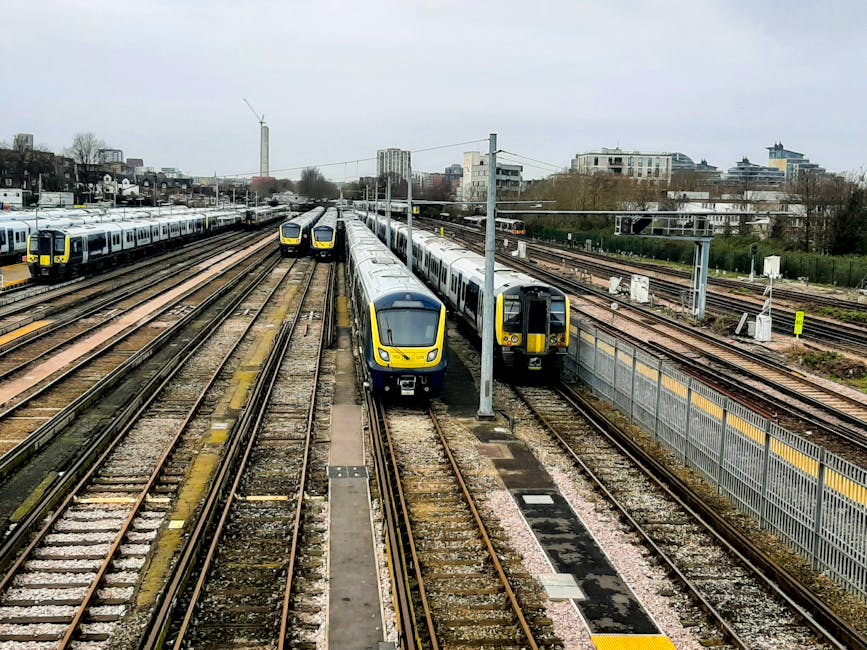
Best routes for removals via Earlsfield Station drop-off
Posted on 07/05/2026
Moving in and out of Earlsfield can feel straightforward on a map and surprisingly fiddly on the ground. The roads may look short, but the mix of station traffic, resident parking, bus movement, school runs, and tight side streets means the smartest route is rarely the most obvious one. If you are planning removals via Earlsfield Station drop-off, the real goal is simple: keep the van moving, keep loading efficient, and avoid unnecessary delays at the point where time and space matter most.
This guide explains how to choose the best routes, where the pinch points usually appear, and how to plan a drop-off that supports a clean, safe move. It is written for people who want practical clarity rather than guesswork. You will also find route-planning tips, a comparison table, a realistic example, and a checklist you can use on moving day.
If you are still organising the broader move, it helps to pair route planning with sensible preparation. Our guide to building a calm and efficient moving plan and this practical article on packing for a smoother move are useful starting points. You will notice that the best routes are much easier to manage when the boxes are labelled, the arrival sequence is clear, and the van is packed in the right order.
Why Best routes for removals via Earlsfield Station drop-off Matters
Route choice affects almost every part of a move. In Earlsfield, the issue is not just distance; it is timing, vehicle access, and how long your van can remain in a workable loading position. A route that looks faster on paper can become slower if it sends you through congested roads at the wrong hour or leaves you circling for a legal stopping point near the station.
For removals, a good route helps you:
- reduce the chance of double-handling furniture and boxes
- limit stress for neighbours, passengers, and pedestrians
- protect heavy items from unnecessary movement and impact
- keep the schedule tight if you are on a time slot
- avoid awkward last-minute decisions at the kerbside
That matters most near transport hubs. Earlsfield Station brings together pedestrians, taxis, short-stay stops, and local traffic patterns that can change quickly. A driver who has planned the access route in advance can usually unload more safely and leave the area sooner. That is better for everyone, including the people who live and work nearby.
In practical terms, route planning is not about being clever for the sake of it. It is about reducing friction. If your team arrives with a van that fits the stop, a planned walk from vehicle to door, and the right sequence for unloading, the move feels organised instead of improvised.
How Best routes for removals via Earlsfield Station drop-off Works
At its simplest, the process has three moving parts: the approach route, the drop-off point, and the exit route. Each one needs a little thought. A station drop-off is usually most effective when the vehicle can enter, stop, unload quickly, and depart without blocking access or reversing into a busy area.
Before you settle on a route, consider:
- Vehicle size - a larger removal van may need more turning space and a wider approach road.
- Time of day - morning commuter periods and late afternoon traffic can create unnecessary delay.
- Item mix - beds, wardrobes, pianos, and appliances need more room and a safer unloading rhythm than bags and boxes.
- Parking restrictions - loading bays, yellow lines, and permit areas can alter where a van can legally wait.
- Walking distance - even a short walk becomes awkward if you are carrying fragile or bulky items.
For many moves, the most efficient option is the route that brings the van as close as possible to the property without forcing it into a tight turn or a prolonged wait. That is why local knowledge matters. A driver familiar with the area will often choose the approach that avoids predictable congestion around the station and side roads, while still keeping access practical for lifting and carrying.
It also helps to think of the drop-off as a controlled handover point rather than a casual stop. The aim is to create a short, tidy window in which the van arrives, the crew unloads in sequence, and the space is cleared. If the drop-off becomes an open-ended pause, the move starts to lose rhythm.
Key Benefits and Practical Advantages
The main benefit of choosing the right route is not just speed. It is control. A controlled move tends to be safer, less tiring, and easier to finish on schedule.
Here are the advantages that usually make the biggest difference:
1. Less waiting time
A well-chosen route reduces time spent idling in traffic or searching for somewhere legal to stop. That gives more of the booked time to the move itself.
2. Better protection for items
Bulky furniture and delicate belongings are safest when they are handled once, not repeatedly lifted out of the van, set down, and moved again because the stop was inconvenient.
If you are moving sofas or upholstered pieces, it is worth reading these sofa storage and protection tips so the item arrives in good condition after the journey.
3. Easier access for the crew
A route that brings the van in from the right side or via a less congested street can make unloading smoother. It sounds minor until you try carrying a mattress around a badly parked vehicle in light rain. Then it suddenly feels very relevant.
4. Fewer last-minute complications
When access is thought through, there is less need to improvise around a bus stop, a narrow junction, or a loading restriction. That reduces mistakes and awkward backtracking.
5. Better customer experience
For landlords, students, families, and business movers, an organised arrival creates confidence. People can see the move is under control, which makes the day feel calmer overall.
These advantages also improve the economics of the move. Less wasted time means less pressure on labour and vehicle scheduling. If you are comparing services, that is one reason to look beyond the headline price and ask how the move will actually be executed.
Who This Is For and When It Makes Sense
This approach is useful for a wide range of removals, not just large house moves. In fact, the need for route planning often becomes more obvious on smaller jobs because there is less room for delay.
- Flat movers who need quick access and minimal carrying distance
- Students moving into or out of shared accommodation with tight time windows
- Families relocating furniture, appliances, and boxes in one coordinated load
- Office movers handling desks, files, monitors, and IT equipment
- One-off item moves such as beds, wardrobes, or a piano
It makes particular sense if:
- you have limited parking near the property
- your move is happening during a busier part of the day
- the building has stairs, a narrow entrance, or shared access
- you need to complete the move quickly and avoid repeated trips
- you are combining a drop-off with same-day removals or a linked collection
For smaller loads, a man and van arrangement can be a strong fit. For example, a man and van service may suit a short, efficient transfer where the priority is flexibility and fast local access rather than a full-scale removals crew. For larger households, a broader removals service is often the better match because it gives you more capacity and a more structured moving process.
Step-by-Step Guidance
If you want the route and drop-off to go smoothly, work through the move in this order. It is simple, but it works.
1. Confirm the exact drop-off point
Do not rely on a vague landmark. Pin down the property entrance, the nearest legal loading area, and the best place for the van to pause. If multiple entrances are available, choose the one that gives the shortest and safest carrying path.
2. Check the route at the time you will travel
Traffic conditions change throughout the day. The best route at 10:00 a.m. may be a poor choice at 4:30 p.m. Use live traffic information and, where helpful, a backup route that avoids the most obvious pinch points.
3. Measure the vehicle against the access
Some roads are technically passable but not comfortable for a long wheelbase van. Turning room, kerb space, and junction angles all matter. If the final approach is too tight, it is better to plan for a slightly longer walk than to create a risky manoeuvre.
4. Match the load to the unloading order
Place the items you need first nearest to the rear of the van. That saves time on arrival and avoids the awkward shuffle where the mattress is buried behind a tower of boxes.
If beds and mattresses are part of the move, this guide to moving beds and mattresses safely is worth a look.
5. Assign roles before you arrive
Someone should guide the driver if space is tight. Someone else should manage the door, protect walls, and direct the order of items. Even a small move becomes easier when each person knows what they are doing.
6. Keep the stop short and purposeful
The goal is not to linger. It is to create a brief, focused unloading window and then move the van on. That reduces congestion and helps the move feel calm rather than chaotic.
7. Have the exit plan ready
Do not treat departure as an afterthought. The best moves are the ones where the van leaves as smoothly as it arrives. If you have a backup exit route, use it if the road has become busier than expected.
Practical summary: plan the approach, protect the access, stage the load, and exit cleanly. The move feels easier because you have removed the guesswork from the critical moments.
Expert Tips for Better Results
A few small decisions can improve the whole day. These are the details people often skip, then regret later.
- Load for sequence, not just weight. Heavy items matter, but so does the order in which you will need them.
- Keep a narrow lane clear. Protect the path from van to door so carriers do not need to detour around bags, bins, or loose items.
- Use the quietest access side. A side street can sometimes be better than the most direct road if it gives easier loading and less pedestrian conflict.
- Protect high-risk items separately. Mirrors, TVs, glass tables, and instruments should not be buried in the general load.
- Choose the time slot carefully. A slightly later start can be more efficient than a rushed journey through commuter traffic.
For delicate or high-value belongings, route planning should be matched with good handling technique. If your team is carrying awkward loads, this piece on safe lifting technique explains the basic idea clearly. And if you have heavier pieces to move without much assistance, the advice in solo heavy-object lifting may help you understand the limits of what is sensible to attempt.
One more tip: keep communication simple. A good mover does not need a speech; they need a clear signal, a clear path, and a place to put the next item. Amazing how often that is enough.
Common Mistakes to Avoid
Most route-related problems come from assumptions. The road looks fine, the stop seems close enough, or the driver believes there will definitely be space. Usually, that is where the trouble starts.
Using the busiest entrance by default
The front door is not always the best unloading point. A side entrance, rear access, or quieter approach can often save time and reduce congestion.
Ignoring local parking realities
Some areas allow only a very short stop, while others require a permit or a specific loading arrangement. If you do not confirm this early, you may end up moving items twice.
Leaving the packing too loose
Unsecured boxes and awkwardly wrapped furniture slow everything down. If you need help getting packing right, our article on packing techniques for a flawless move gives practical pointers that are easy to apply.
Arriving without a clear sequence
If nobody knows what comes off first, the van turns into a puzzle. That is rarely a fun puzzle on moving day.
Underestimating stairs or shared corridors
A short walking distance is not always a short moving distance. A building with stairs, doors, and narrow landings can slow even a small job if the route is not chosen properly.
Forgetting the departure plan
Many people plan how to arrive but not how to leave. That can create an unnecessary blockage once unloading is complete.
Tools, Resources and Recommendations
You do not need specialist software to plan a decent route, but a few tools and references can help.
- Live mapping apps for traffic-aware route checks
- Parking and loading notes from the building manager or landlord
- Inventory list to match items with the unloading order
- Protective packing supplies such as tape, blankets, mattress covers, and stretch wrap
- Phone photos of access points, stairs, and kerb space before moving day
If you still need boxes, wrapping, and item protection materials, the packing and boxes service is a sensible place to start. For larger moves, you may also find the services overview helpful when comparing what type of support you actually need.
When storage is part of the plan, it is worth thinking ahead about where items go before and after transit. A practical guide to storage options in East Sheen can help if you are between properties or need to stagger the move.
Law, Compliance, Standards and Best Practice
For a local removals job, compliance is mostly about road use, safe working, and respecting access rules. You do not need to overcomplicate it, but you do need to take it seriously.
Useful best-practice points include:
- park only where the vehicle is allowed to stop or load
- avoid blocking crossings, driveways, junctions, or emergency access
- follow any building access rules, concierge instructions, or resident permit conditions
- keep lifting and carrying within sensible limits
- use suitable protective equipment when needed, especially for awkward or heavy items
Professional movers should also work in line with sensible health and safety practice. If you want to understand how a provider approaches risk, the health and safety policy and insurance and safety information are both worth reading before you book.
There is also a basic duty of care in how people handle property and public space. That includes not leaving obstruction behind, not damaging kerbs or shared areas, and not making unreasonable demands on neighbours or passers-by. In practice, the best removals jobs are the ones that look considerate from the outside as well as efficient on the inside.
Options, Methods, and Comparison Table
Not every move needs the same approach. The best route for Earlsfield Station drop-off depends on how much you are moving, how tight the access is, and how quickly the job needs to be finished.
| Approach | Best for | Advantages | Trade-offs |
|---|---|---|---|
| Direct station-area drop-off | Small to medium moves with close access | Short carrying distance, faster turnaround | Can be sensitive to traffic and stopping restrictions |
| Quiet side-street approach | Flats, shared houses, and awkward access points | Often calmer and easier for unloading | May require a slightly longer walk to the entrance |
| Pre-arranged loading bay or permit stop | Moves with stricter access control | Predictable, legal, and organised | Needs advance planning and confirmation |
| Timed off-peak arrival | Time-sensitive moves and larger vehicles | Less congestion, better manoeuvring space | May require earlier or later scheduling |
For larger or more complex jobs, it is often wiser to choose the route that gives the crew a better unloading environment rather than the shortest possible road distance. A few extra minutes in the van can save a lot of carrying strain at the kerbside.
If you are comparing service types, it can also help to look at more tailored pages such as flat removals, house removals, or office removals depending on the type of property and the kind of access you need.
Case Study or Real-World Example
Consider a typical move involving a one-bedroom flat, a sofa, a bed frame, a mattress, several boxes, and a couple of small appliances. On paper, the shortest route to the property appears simple. In reality, the most direct road sits near the station area, where short-stay stopping is unpredictable during the morning rush.
Instead of forcing a stop on the busiest stretch, the mover chooses a nearby side approach with a legal loading point and a short, level walk to the entrance. The van arrives ten minutes later than the first estimate, but the unload is smoother because the vehicle can stop cleanly and the team does not need to keep shifting items around other traffic.
The key difference was not speed on the map. It was access in the moment.
The sofa came off first, then the mattress, then the boxes that were needed immediately. The driver left once the main load was clear, then returned for the final smaller items after the path had been checked and the entry area was free. That small bit of sequencing saved effort and prevented the move from becoming a series of rushed half-steps.
For sensitive items such as a piano, a specialist approach is even more important. If your move includes one, the warning signs in this guide to piano moving risks are worth taking seriously. It is one of those jobs where trying to save time can easily cost more time later.
Practical Checklist
Use this before the van arrives.
- Confirm the exact property entrance and drop-off point
- Check the legal parking or loading position near the station area
- Review live traffic and choose a backup route
- Measure whether the van can turn and stop safely
- Load items in the order they will be needed first
- Protect furniture, mattresses, and fragile items properly
- Keep the access path clear from van to door
- Brief everyone involved on roles and timing
- Prepare any permits, keys, codes, or access instructions
- Plan the exit route as carefully as the arrival route
- Keep contact details handy in case of a last-minute access issue
- Check the property for anything that could be damaged during carrying
If you are also clearing out, the advice in pre-move decluttering can make the load lighter and the route easier to manage. Fewer items usually means fewer problems. A rare case where less really is more.
Conclusion
The best route for removals via Earlsfield Station drop-off is the one that balances legal access, practical unloading, and low-stress movement. That may be the shortest route on a map, but it may also be a slightly quieter side road, a timed stop outside the rush, or a more careful approach that protects the vehicle and the items being moved.
Good removals are rarely about luck. They are about preparation, sequence, and choosing the route that makes the rest of the job easier. If you plan access properly, confirm the stop, and keep the unload organised, the whole day usually feels more manageable than people expect.
When you are ready to move, choosing the right support matters just as much as choosing the right road. If you want help planning the move itself, it may be worth exploring removal services in East Sheen or speaking to a team that understands local access, timing, and the realities of station-area drop-offs.
Get a free quote today and see how much you can save.